


Fantasy has been alive and well in children’s literature for centuries, and as near as I can tell, it shows no signs of fading anytime soon.
Since ancient times the “literature of the impossible” has served as a perfect medium both for inspiring wonder in the young as well as for communicating important truths. There’s a reason they’re called “fairy tales,” after all—and a reason children have always loved them.
In a previous recommendation list, Fantasy Novels for Literature Lovers, I mentioned that compiling a list of well-written fantasy inevitably draws children’s literature into the conversation. Many of the most beloved works in the genre were written for younger readers, yet remain powerful and meaningful long after childhood.
However, that earlier list grew so long that I decided to spin these titles off into their own post.
And so—voilà! Here it is in all its glory: a list of classic fantasy books for smart children, not to mention we who are still young enough at heart to remember the delight of discovering magic for the first time.
My (Vague) Selection Criteria
As with all my lists, please remember this is subjective. Think of these selections as representatives rather than some definitive or exclusionary canon.
Strangely enough, I actually found this one harder to curate than my fantasy list for adults. There are simply so many wonderful options! I’m not exaggerating when I say this list could easily run to a hundred entries or more.
Compiling the list proved tougher than I expected especially when considering newer works. Because I’m trying to focus on “classics,” meaning children’s fantasy that has clearly stood the test of time, the more recent a book is, the harder “timelessness” is to assess. So you’ll notice I lean heavily toward older works—generally those fifty plus years old—which have wrestled their way from one generation into the next.
Also, I tried to choose stories I’d argue possess that quality I’ll vaguely (and perhaps snobbishly) call strong literary merit. By that I mean prose that is well written (appropriate to the reading level, of course), that neither placates nor talks down to children, yet at the same time acts as a conduit for deep meaning and sublime significance.
So aside from the no-brainer classics included here, I gave myself a bit of wiggle room by asking one guiding question—one I totally made up:
“What books should every precocious child read while they’re still young?”
That question helped narrow things down a tad, though I’ll readily admit someone else could ask the same question and swap out many of the titles I ended up choosing.
By “still young,” I had in mind a fuzzy definition of “pre-teen, yet old enough for chapter books.” Think mid-elementary through early middle school readers (or so). I did not include any picture books for younger readers, though many of those are (obviously) wonderful in their own right.
At the same time, a few titles here push the upper edge of that range. Not every sixth or seventh grader will breeze through Tolkien or Stevenson, but a curious and ambitious reader absolutely can (and often should)—especially if they’re sitting on Mom’s or Dad’s lap on the couch. After all, sharing wondrous stories is one of the great joys of parenthood.
Finally, if you don’t see your—or your children’s—favorite book here, please don’t shoot me. Feel free to shoot off a comment, though, to tell me what a knucklehead I am… (I’ll probably agree.)
So without further ado, off we go!
BOOKS FOR YOUNGER READERS
Aesop’s Fables (c. 600 BC)
Grimm’s Fairy Tales (1812)
Greek Mythology (ancient)
I’m lumping Aesop, Grimm, and mythology together as all three are obvious inclusions, yet I suspect many parents don’t initially think of them. Kids absolutely love these stories (as do adults, obviously). The ancient wellspring of fantasy storytelling, myths, fables and fairy tales are eternal, and have introduced generations of children to magical worlds, heroic adventures, and the moral imagination that underlies our beautiful Western literature.
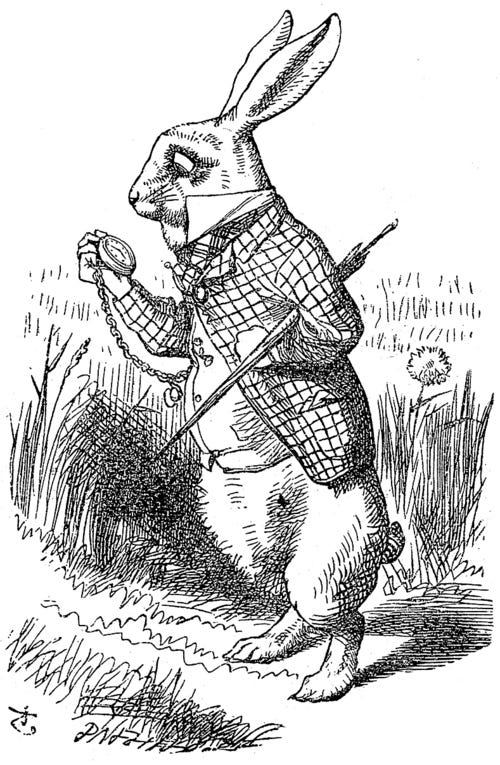
Alice’s Adventures in Wonderland by Lewis Carroll (1865)
Carroll’s strange masterpiece of dream logic, wordplay, and delightful nonsense remains one of the most imaginative children’s books ever written. While some of the animated versions did a nice job of capturing the wacky spirit of Alice’s adventure, reading this is a tour de force in playful humor, symbolism, and the necessity (and confusion) of logic itself. (Plus who doesn’t love a good jabberwocky story?)
Pitch: A curious girl named Alice tumbles down a rabbit hole into a bizarre world where logic bends, animals talk, and nothing—absolutely nothing—makes sense.
The Princess and the Goblin by George MacDonald (1872)
I have actually never read this, but I had to include it as MacDonald influenced writers from Tolkien to C. S. Lewis. In fact, many claim this enchanting fairy tale helped inspire the entire modern fantasy tradition!
Pitch: A young princess and a brave miner boy must outwit a sinister race of goblins plotting beneath the mountains.
The Wonderful Wizard of Oz by L. Frank Baum (1900)
If you’ve only seen the Judy Garland movie (or worse, Wicked), you’re missing out. Baum’s fairy tale blends whimsical adventure with memorable characters, imaginative worldbuilding, and folkloric traditions in a way that still captivates readers 125 years later. I’m especially taken aback by how American it is, blending Americana with fairy tales in the best possible way.
Pitch: Swept away by a cyclone, Dorothy journeys through the magical land of Oz alongside a scarecrow, a tin man, and a cowardly lion in search of a wizard who can send her home.
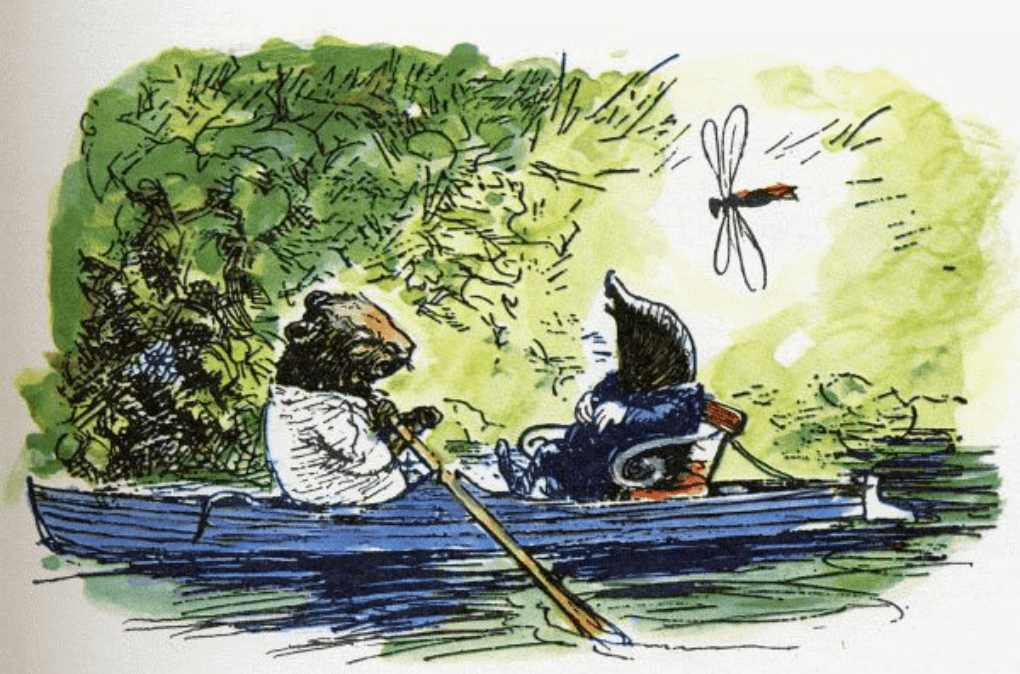
The Wind in the Willows by Kenneth Grahame (1908)
Cozy fantasy a century before cozy fantasy became a thing. Grahame’s gentle animal fantasy mixes pastoral beauty, friendship, and just enough adventure to create one of literature’s most charming worlds–and oh how beautifully written. It’s breathtaking!
Pitch: Mole, Rat, Badger, and the wildly irresponsible Mr. Toad tumble through riverbank escapades, woodland dangers and the occasional motorcar disaster.
Charlotte’s Web by E. B. White (1952)
You might not know that E.B. White was a masterful essayist (co-penning the classic on writing, Elements of Style) who happened to pen two of America’s best children’s stories, Stuart Little and this one about a pig. This quiet classic combines talking animals with a surprisingly profound (and moving) meditation on friendship, loyalty, and the fleeting beauty of life. (If you don’t tear up at the end, you’re a stronger person than I!)
Pitch: When Wilbur the pig learns he’s destined for the dinner table, a clever spider named Charlotte hatches a miraculous plan to save him.
The Chronicles of Narnia by C. S. Lewis (1950–1956)
Not sure if much need be said about this series, starting with fantastic The Lion, The Witch, and the Wardrobe. Lewis’s beloved portal fantasy blends a creative, thrilling adventure with deep moral imagination, resulting in a magical world infused with Christian sensibilities of surprising depth. (Not to mention one of the best animal characters ever created, the amazing Reepicheep.)
Pitch: Through an ordinary wardrobe, a group of children stumble into the enchanted land of Narnia, where talking animals, ancient magic, and the great lion Aslan await.
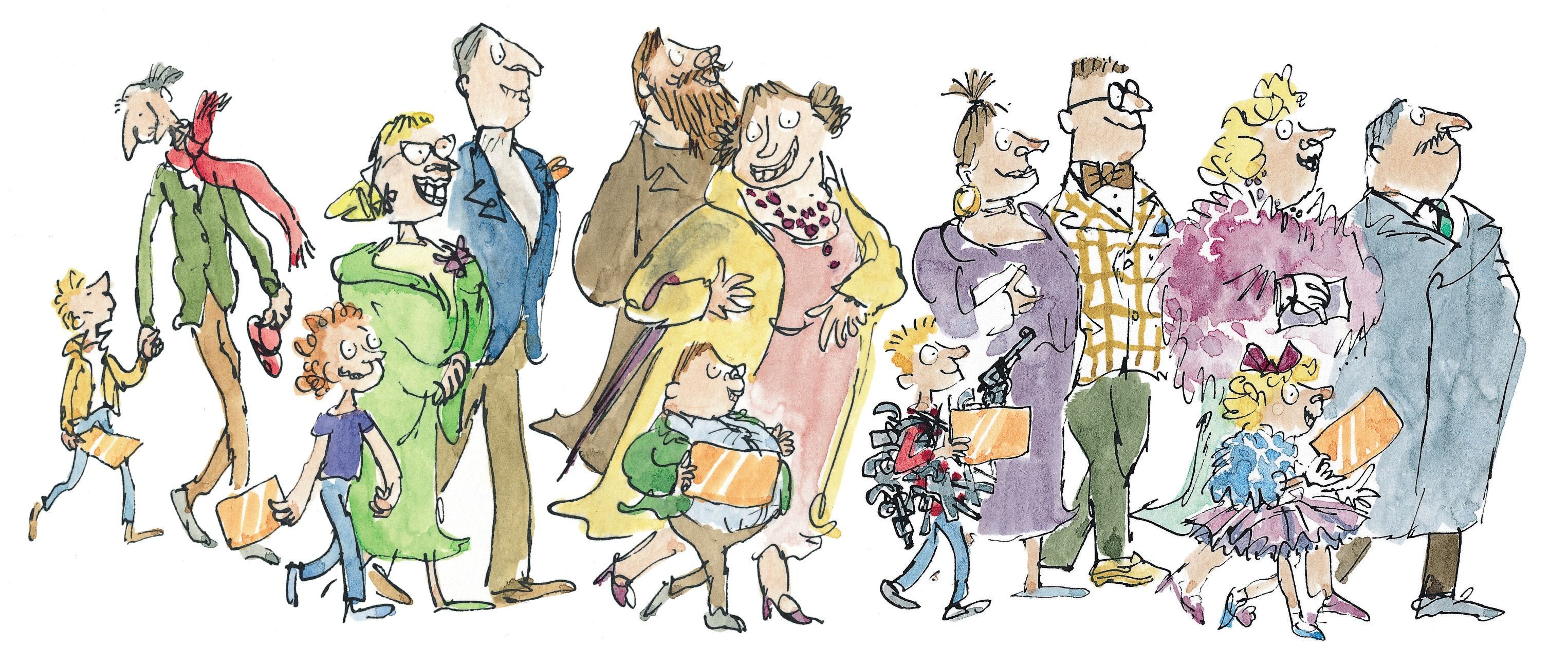
Charlie and the Chocolate Factory by Roald Dahl (1964)
I could have listed many of Dahl’s books, as each is wildly imaginative, delighting readers with his outrageous humor, grotesque villains, and an overwhelming sense of hope. While Charlie may be best known, others such as The Fantastic Mr. Fox, James and the Giant Peach, Matilda, and The BFG are each unforgettable.
Pitch: Poor but kind-hearted Charlie Bucket wins a golden ticket to tour Willy Wonka’s mysterious chocolate factory—where strange sweets and even stranger fates await the other children.
BOOKS FOR (SLIGHTLY) OLDER READERS
Treasure Island by Robert Louis Stevenson (1883)
Okay, I cheated here. This is only “fantasy” in that a child could never do what Jim does in this book—and that’s pretty thin. But I absolutely love Treasure Island and find it contains the spirit of all the best fantasy (I know, cheap.) I myself didn’t read it until my 30s, and immediately regretted not having discovered it at age twelve. Stevenson’s swashbuckling adventure is surprisingly subtle despite its constant tension and excitement. It practically invented the modern pirate story–possibly even the “boy’s book”--and remains one of the most thrilling tales ever written for young readers.
Pitch: Young Jim Hawkins discovers a treasure map and soon finds himself sailing toward danger, mutiny, and the influence of the pirate Long John Silver.
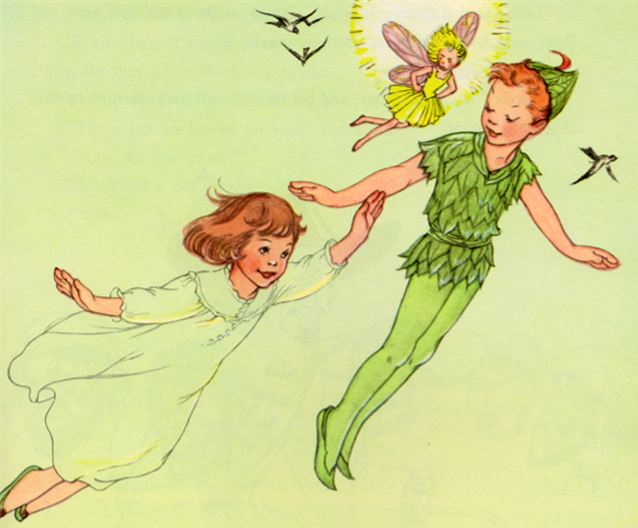
Peter and Wendy by J. M. Barrie (1911)
Another on my TBR list, as I (like most of us) am very familiar with the story from film adaptations, but have not yet leapt into Barrie’s original play or novel. Still, I feel confident recommending the original story of Peter Pan, with its mix of wonder, adventure, and melancholy–not to mention a deep rumination on growing up (or not).
Pitch: Peter Pan whisks Wendy and her brothers away to Neverland, where pirates, mermaids, and the ticking crocodile await.
The Hobbit by J. R. R. Tolkien (1937)
It’s interesting that in our day and age we often forget The Hobbit was originally a children’s book–and a perfect one at that. Tolkien’s adventure story manages to be funny, thrilling, and mythic all at once, and often uses fairy tale tropes just as much as it breaks new ground, suggesting the epic fantasy its “sequel” would ultimately invent.
Pitch: The comfort-loving hobbit Bilbo Baggins is swept into an unexpected quest to help a band of dwarves reclaim their treasure from a fearsome dragon.
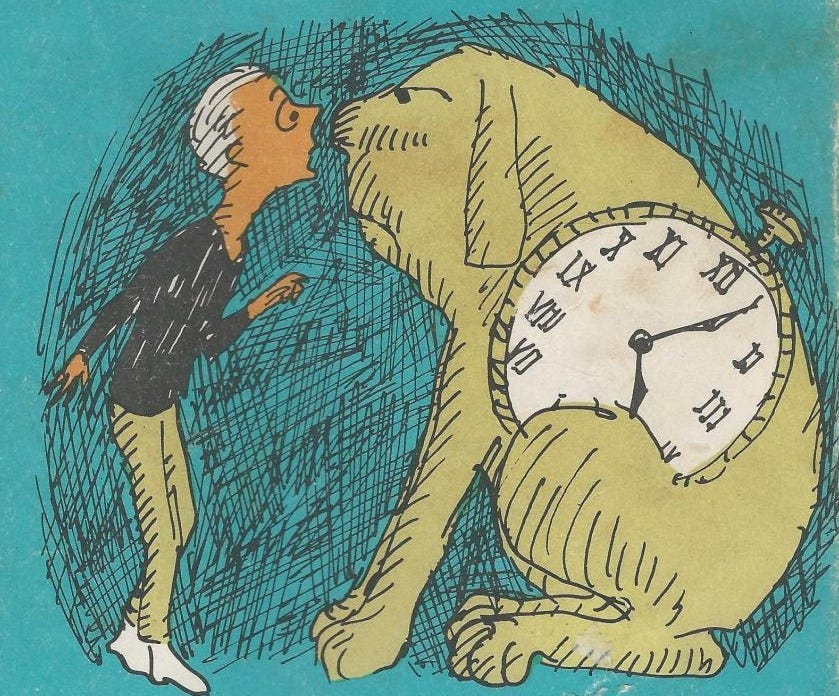
The Phantom Tollbooth by Norton Juster (1961)
This entry is one of my three selfish inserts into this list (Treasure Island was the first; the third is below). I read Juster’s fantasy when I was about ten and adored it, and then a decade or more later reread it only to realize how brilliantly clever it is. A little like Alice in Wonderland, this is a book that plays with the English language and, strangely, mathematics–which may sound boring as all get out, but trust me, it’s both fascinating and hilarious. The wordplay, logic puzzles, and philosophical humor is all hidden beneath a relatable children’s portal adventure. (Give this one a try for sure!)
Pitch: A bored boy named Milo drives through a mysterious tollbooth into a land where words and numbers literally come to life.
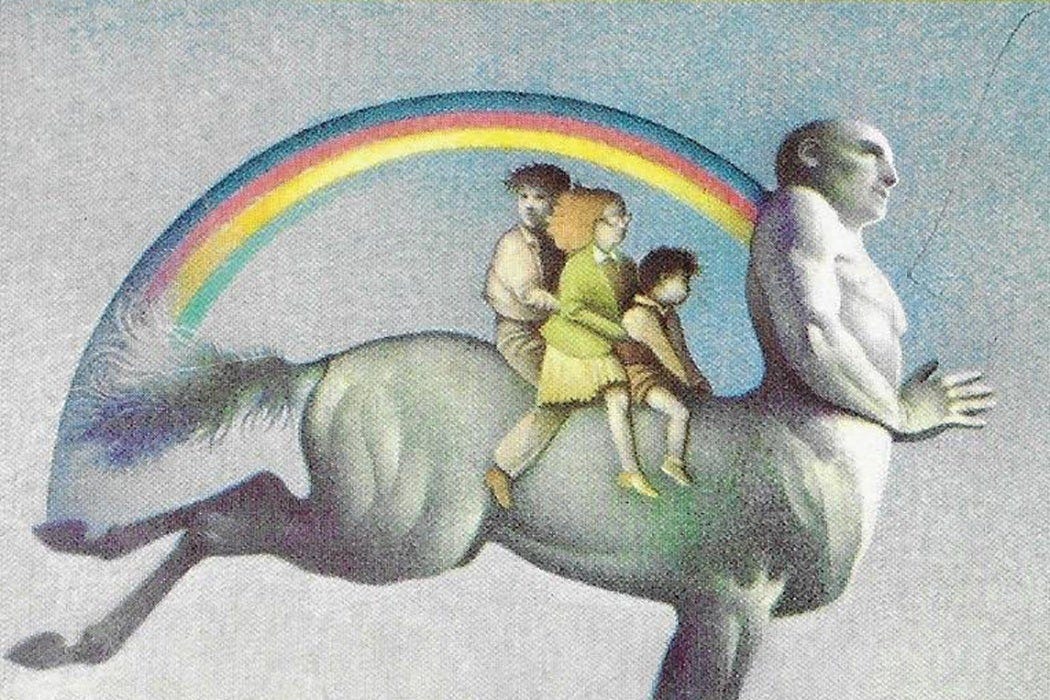
A Wrinkle in Time by Madeleine L’Engle (1962)
No list of children’s fantasy is complete without L’Engle’s unusual blend of fantasy, science fiction, and spiritual allegory. This book helped redefine what children’s speculative fiction could achieve.
Pitch: Meg Murry travels across space and time with two strange celestial guides to rescue her father from a dark cosmic force.
A Wizard of Earthsea by Ursula K. Le Guin (1968)
Admission time: I’m not much of a fan of this book (see my review here), but a blind man can see how influential and beloved it is. Le Guin’s prose is sparse and (often) elegant, elevating this story to the level of a mythic coming-of-age story, not to mention one of the first to use the “wizard school” trope. Its themes are also worthy of exploration, including power, responsibility, and self-knowledge—even if it is all a bit “hippy.”
Pitch: A gifted young wizard named Ged unleashes a shadow creature he cannot control—and must journey across the seas to face the darkness he created.
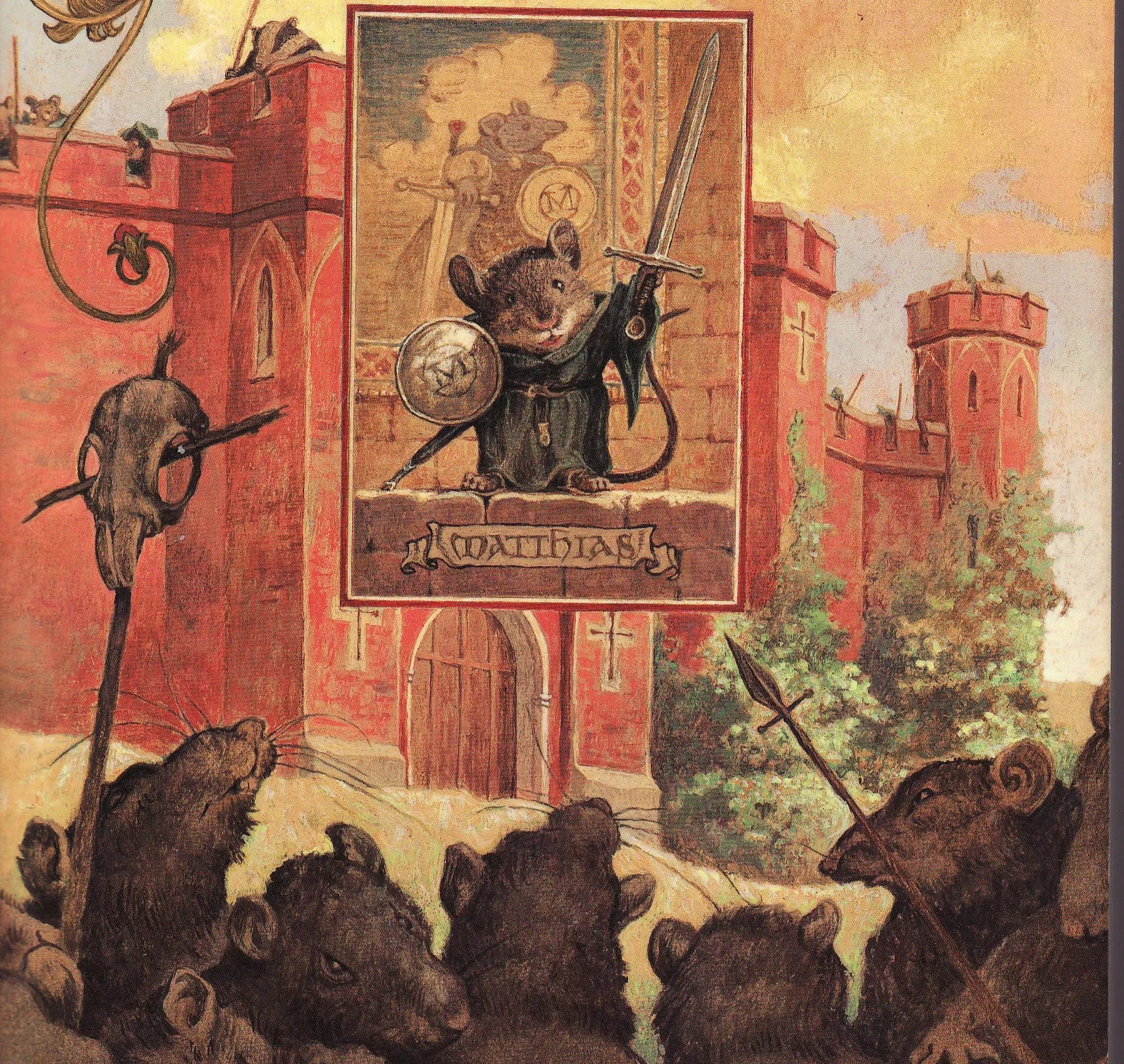
Redwall by Brian Jacques (1986)
This is my third personal add-in: my son, Mitchell, adored this novel, and he was in good company: millions of other kids around the globe agree. While I’m not sure if Redwall will survive to become a timeless classic, it should. Jacques’s fantasy of mice, rabbits, and badgers is a resonant epic with clear morality, well-crafted writing, and universal significance (not to mention mouthwatering feasts!) (Here’s a post I wrote about it, and here’s a second.)
Pitch: When the villainous rat Cluny the Scourge attacks Redwall Abbey, the young mouse Matthias must rise to become the hero his people need.
Harry Potter and the Philosopher’s Stone by J. K. Rowling (1997)
I said at the outset that I focused on classics over fifty years old, but Rowling is forcing me to break that rule. Although Harry Potter is a gargantuan cultural phenomenon, none of us know how it will be perceived in two or three generations. That being said, I feel pretty confident it will have a long legacy—at the very least paralleling Oz: perhaps not read as much in 50, 75, 100 years, but known and loved. Rowling’s writing is nothing special, but the story and characters clearly are–not to mention its exploration of base level positive virtues.
Pitch: An orphaned boy discovers he is a wizard and begins his first year at Hogwarts School of Witchcraft and Wizardry—where dark secrets are already stirring.
Just for completion’s sake, here are some of the “top contenders” that almost made the list…
Winnie the Pooh - I worried this was too young…though it’s excellent!
The Bridge to Terabithia - Despite its magic, I’m not convinced of its staying power
Tuck Everlasting — ditto above
The Neverending Story -ditto above
Mary Poppins - I feel this is already shrinking?
The Chronicles of Prydain - Love these! You could convince me to move it up!
Percy Jackson (series)- The writing here is…well…
Thanks for visiting the Reading Room! I love books, especially classics—both in general and sci-fi/fantasy, and love talking about them! So let’s keep the conversation going—what do you think?
You should definitely move The Chronicles of Prydain onto the list! I’d also suggest The Gammage Cup by Carol Kendall, but it’s not well-known. I’m torn about The Neverending Story, as that’s the book I discovered in my twenties that I wish I’d read at twelve, but that’s another story for another time…
My 7 year old just finished The Princess and the Goblin and loved it.