


In my last post, I recommended Gene Wolfe’s Book of the New Sun, boldly calling it life-changing.
There are countless reasons for this—more than I could do justice to without extensive research and time. Honestly, I’m not interested in that right now, not so soon after finishing Wolfe’s masterpiece. I’m still basking in its glow, still processing the thoughts and emotions it stirred. Like falling in love, some things should be felt before they’re dissected.
And yet—here I am, dissecting it. At least in one respect: structure.
Much has been said about Wolfe’s Melvillean prose, his science-fantasy world, the character of Severian, his symbolism, his themes. All of it matters. But the aspect that struck me most as a reader (and excites me most as a writer) is the novel’s narrative flow.
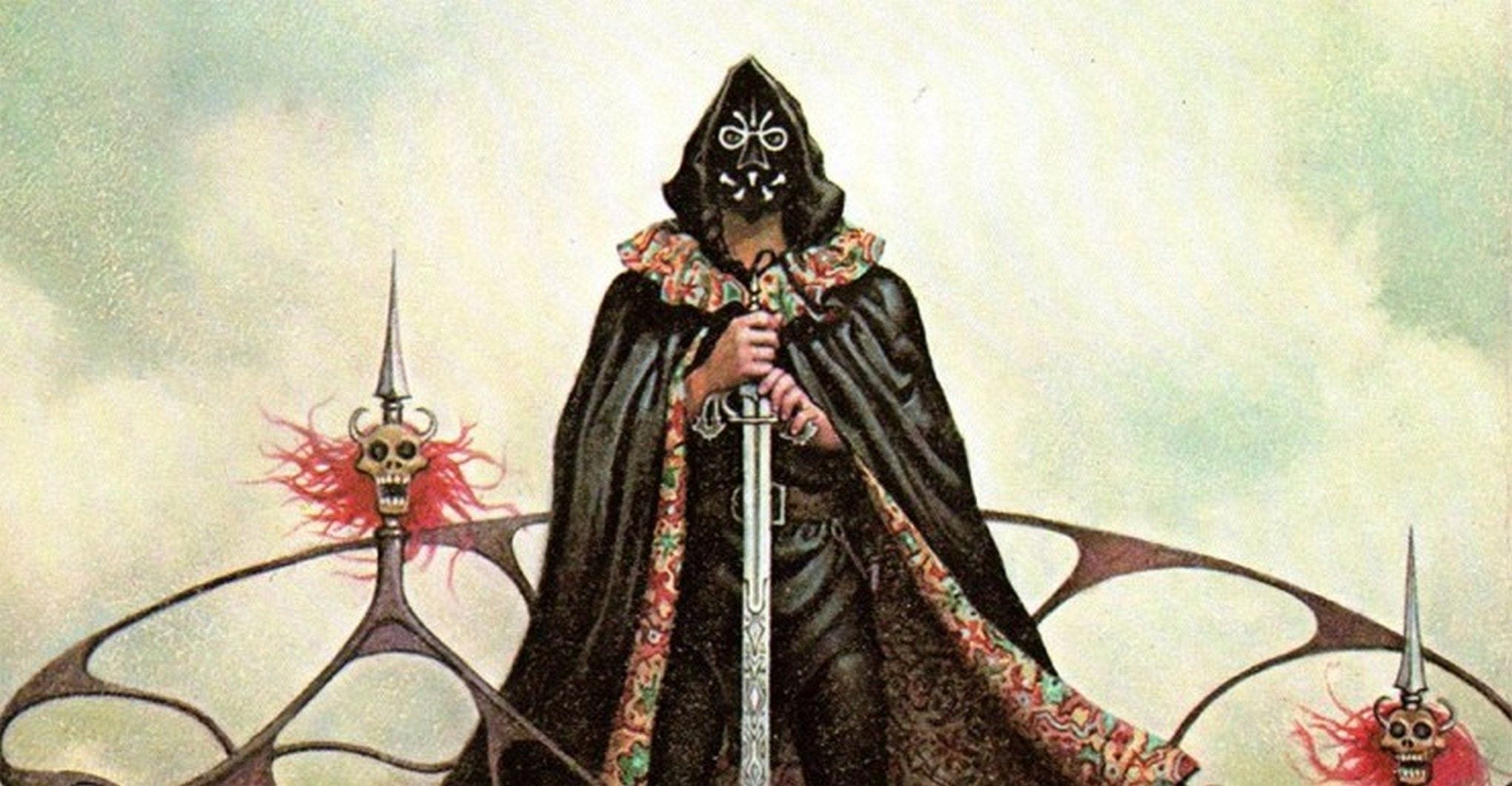
New Sun’s Structure
At its core, a novel’s “structure” is simply the order in which plot events are told—the blueprint that guides readers through the story. Writers are often taught that this part of storytelling is practically scientific: follow the formula, hit the beats, satisfy the reader. A quote from the publishing website Reedsy sums it up:
““While stories can be told in a wide variety of ways, most Western story structures commonly share certain elements: exposition, rising action, climax, falling action, and resolution.
A tightly controlled structure will answer a reader's questions, provide a climax followed by resolution and information at the end of the story, further the characters’ development, and unravel any central conflicts. In other words, it's responsible for a satisfying narrative experience that accomplishes the author’s aims.
Writing is an art, but if there’s one part of the craft that’s closer to science, this would be it.”
Gene Wolfe seems unconcerned with such guidelines. He bends the rules of structure until they nearly snap. And yet the result works beautifully. That may be a bit dramatic—I see the key elements (rising action, climax, etc.), but not in the usual places, and not in the usual ways.
Steps on the Path
New Sun’s structure is both tight and loose.
Severian’s journey from apprentice to ruler unfolds episodically, with each event forming a small arc: a beginning, middle, and end. Some episodes span a single chapter; others stretch across several. Often the pattern is: “Severian stumbles into X, does Y, and ends up Z.” For example, at the start of the novel:
He stumbles upon the rebel Vodalus, protects him, and receives a gift that binds him to the rebellion.
He finds a dying dog, nurses it back to health, allowing it to find freedom.
He’s promoted in his guild, participates in the Saint Katherine rite, and asserts authority over his peers.
Each episode basically stands on its own. In fact, if Book of the New Sun were a TV series, these could be self-contained installments—complete with the occasional “To Be Continued.” (Let’s pray no one ever tries to make this a show, though: I shudder to imagine how Amazon or Netflix would would butcher it.)
But is New Sun just a loosely strung series of vignettes? Not quite. It’s much more than a collection of stories featuring the same protagonist. I see Wolfe using three key techniques to tie the novel into a unified, deeply satisfying whole.

Three Techniques
First, there’s the narrative hook of Severian’s destiny. From the outset, he tells us he’ll “back into the throne,” eventually becoming the Autarch. This isn’t a spoiler—it’s a source of dramatic tension. We’re invited to wonder how this disgraced torturer’s apprentice could possibly rise to rule Urth. Telling us the end, giving readers crucial information about the conclusion, keeps us turning pages, wondering how and when it will happen.
Second, there’s the voice and character of Severian himself. To be honest, I found him emotionally flat—detached, clinical, and morally inconsistent. But that fits. He’s a man raised to torture, clinically trained to suppress empathy. He treats women as objects, acts impulsively, and yet, crucially, he's not evil. In fact, he’s frequently kind, honest, and surprisingly often he’s self-sacrificing. Severian is a good man raised wrong, surviving in a fallen world.
Watching him progress, following his change, is part of what makes the novel so compelling. Wolfe doesn’t foreground this transformation as most novelists do, but the signposts are there: Severian not only falls in love but in the end devotes himself to one woman; he becomes an adoptive father; once ruler, he vows to reform (or possibly abolish) the very Guild that shaped him. Even his religious awakening, focusing on death and rebirth (through the Claw and the alzebo) builds quietly until it culminates in a beautiful revelation on the beach:
What struck me on the beach–and it struck me indeed, so that I staggered as at a blow–was that if the Eternal Principle had rested in that curved thorn I had carried about my neck across so many leagues, and if it now rested in the new thorn (perhaps the same thorn) I had only now put there, then it might rest in everything, in every thorn in every bush, in every drop of water in the sea. The thorn was a sacred Claw because all thorns were sacred Claws; the sand in my boots was sacred sand because it came from a beach of sacred sand... Everything was a relic. All the world was a relic. I drew off my boots, that had traveled with me so far, and threw them into the waves that I might not walk shod on holy ground.
Finally, there’s Wolfe’s use of what I’ll call recursion. Events echo across the narrative like memories resurfacing again and again. A dog from childhood reappears in thought hundreds of pages later. Names, objects, and moments are revisited, over and over, deepening their meaning each time. This not only unifies the structure, keeping the events from spinning from the overarching narrative, but it reflects Severian’s mind: he remembers everything, and everything gains weight through memory. Stories within stories, plays within plays—all follow the same small-scale structure of event and remembrance, creating a fractal pattern that mirrors the whole.
Final Thoughts
For we readers, Wolfe’s inventiveness creates a layered, immersive, highly satisfying experience.
For writers, Wolfe offers a powerful lesson: structure doesn’t have to follow a “Save the Cat” formula to satisfy. It just has to fit the soul of the story. In Book of the New Sun, that soul is mysterious, digressive, recursive, and strange—but all the more powerful because of it.
Thanks for visiting The Reading Room! I’d love to hear your thoughts, as I’m enjoying grappling with Wolfe—and will be for a long, long time.
The book of the new sun is the single finest sci-fi/fantasy ever written.
Although Severian says he remembers everything, Wolfe is careful revealing this power. Severian does recall events or people like Howard Cosell. I think, based on interviews I have read with Wolfe, he wanted to provide the reader confidence that the imperfect narratation of the first person was going to be pretty much perfect. Knowing Severian has this power, we trust his recollections. Smart guy, Wolfe.