

Will Tolkien Be Forgotten?
What makes a book a timeless classic—and does Lord of the Rings qualify?

I often (and rather glibly) brag that Tolkien has earned his place alongside the greats of Western literature. But does he actually deserve “classic” status? Is The Lord of the Rings, in particular, a Great Book—a masterwork fit to be hailed through the ages, forever read, enjoyed, praised, and studied? Or is his popularity just the flavor of the day—so in a hundred years from now our descendants will squint back at us for thinking so highly of this geeky story about orcs, magic rings, and other nonsense?
Let’s think about this a bit, shall we?
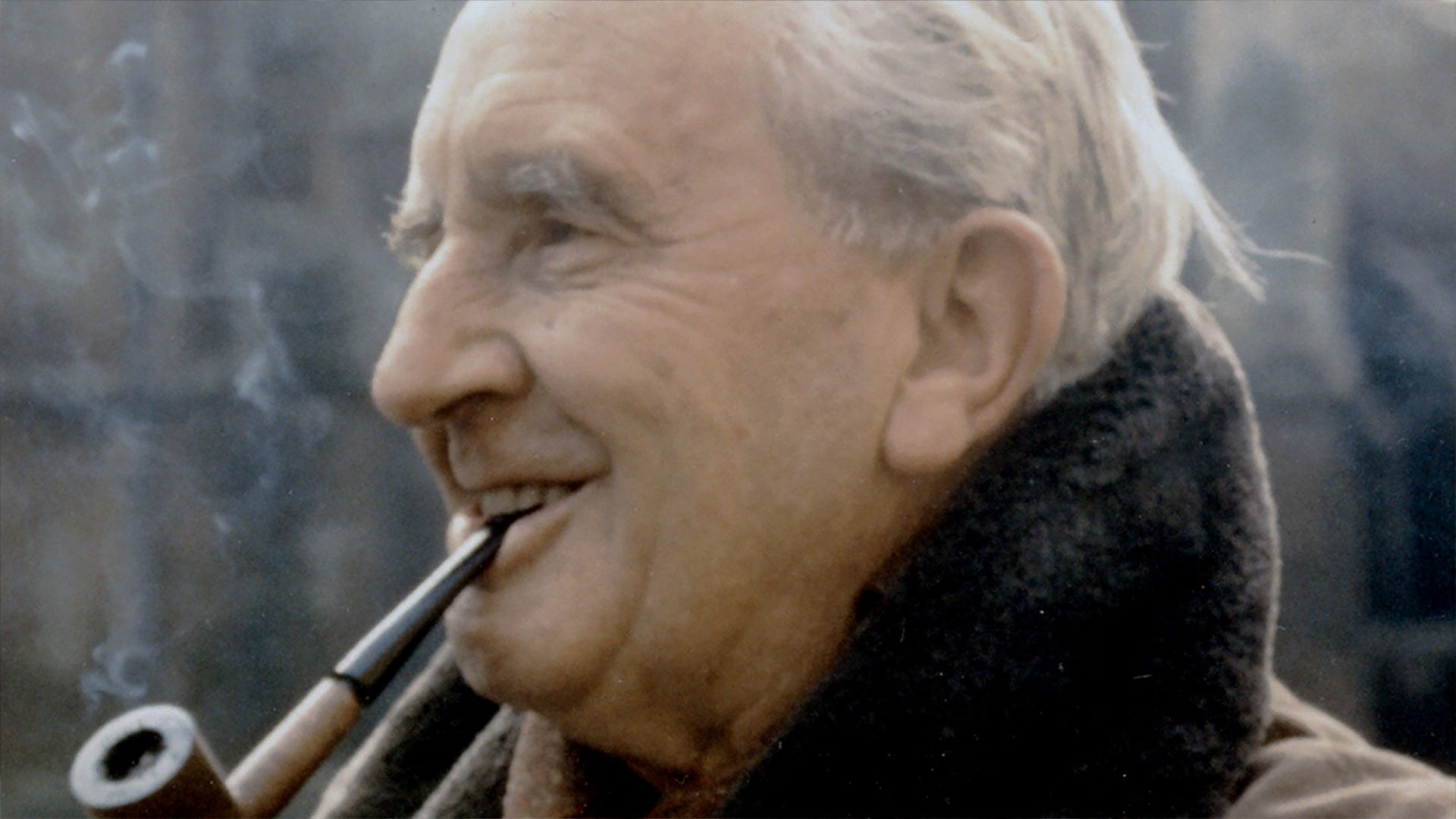
How Books Become Immortal
To start, we should define our terms. Namely, what is a “classic” book? Only after coming to grips there can we guess—and of course, it’s only a guess—whether Tolkien fits the criteria.
In his little booklet Literary Taste (1909), Arnold Bennett outlines the path books follow to become “greats.”1 First, Bennett flatly states that popularity is always beside the point. Nearly every popular work—even those once adored as “modern masterpieces” by critics of their day—fail to become classics. The fanfare dies off, sales plummet, all awards are forgotten, and readers move on to the new flavor of the moment.
Exhibit A:
Booth Tarkington—ever heard of him? Me neither. But in the 1910s and 1920s he was widely considered the United States’ greatest living author, winning accolades and awards including not one but two Pulitzers. But today?…
Exhibit B:
Pearl S. Buck, whose The Good Earth was a 1931–32 bestseller, became the first American woman to win the Nobel Prize in Literature. Nowadays, is she read outside feminist theory courses or by random PhD students?
Exhibit C, D, & E:
Wilkie Collins, Sherwood Anderson, and Thomas Wolfe… ’Nuff said. You get the idea. Fame—both societal and critical—is fickle, and soon fizzles out.
And yet, whether or not they’re initially popular, some novels do manage to live on. A handful even grow to mountainous proportions. How?
Bennett believes it all stems from the admiration of a minority of passionate readers. Not the general public. Not college professors. Not publishers or editors. Not even critics. A broader body of hardcore literature aficionados—those with “a hot interest in literature,” who read not merely for “fun,” but because it’s who they are. For them, living without books is living without air. Or, as Bennett says, “They enjoy literature as some men enjoy beer.” (Ha! Nice one, Arnold.) You know the type: they bore everyone at Thanksgiving about the symbolism of wishbones in eighteenth-century British romances. That type.
(Hey, wait—I do that! …)
Whenever this obsessed faction magnetizes around some book’s special something—feeling it yields a deep, evergreen reading pleasure—they adopt the book as their own. They sing its praises. Near-fanatically. And simply put, this is what makes “a classic” to Bennett:
“A classic is a work which gives pleasure to the minority which is intensely and permanently interested in literature.”
But it doesn’t stop there.
Over the centuries, literary praise for the chosen poem, play, or novel is again and again whipped up by one “persistent minority” after another, because they just can’t leave a certain author alone. They “kept on savouring him, and talking about him, and buying him” (not to mention posting brilliant Substack posts about him.) Until at last, the public-at-large accepts their verdict. Everyday Joes soon find themselves praising Shakespeare, Dickens, or Austen… not because they actually read them (they don’t), but because these writers are so frequently hailed as “great” that normies figure they must, in fact, be great. And they are.
Public taste in fine literature is thus, in large part, an echo of concentrated enthusiasm. A classic survives across generations because the “passionate few” repeatedly re-experience it strongly enough to keep obsessing about it—and they drag the culture along with them.
It seems obvious to me this is exactly what’s happening with The Lord of the Rings.
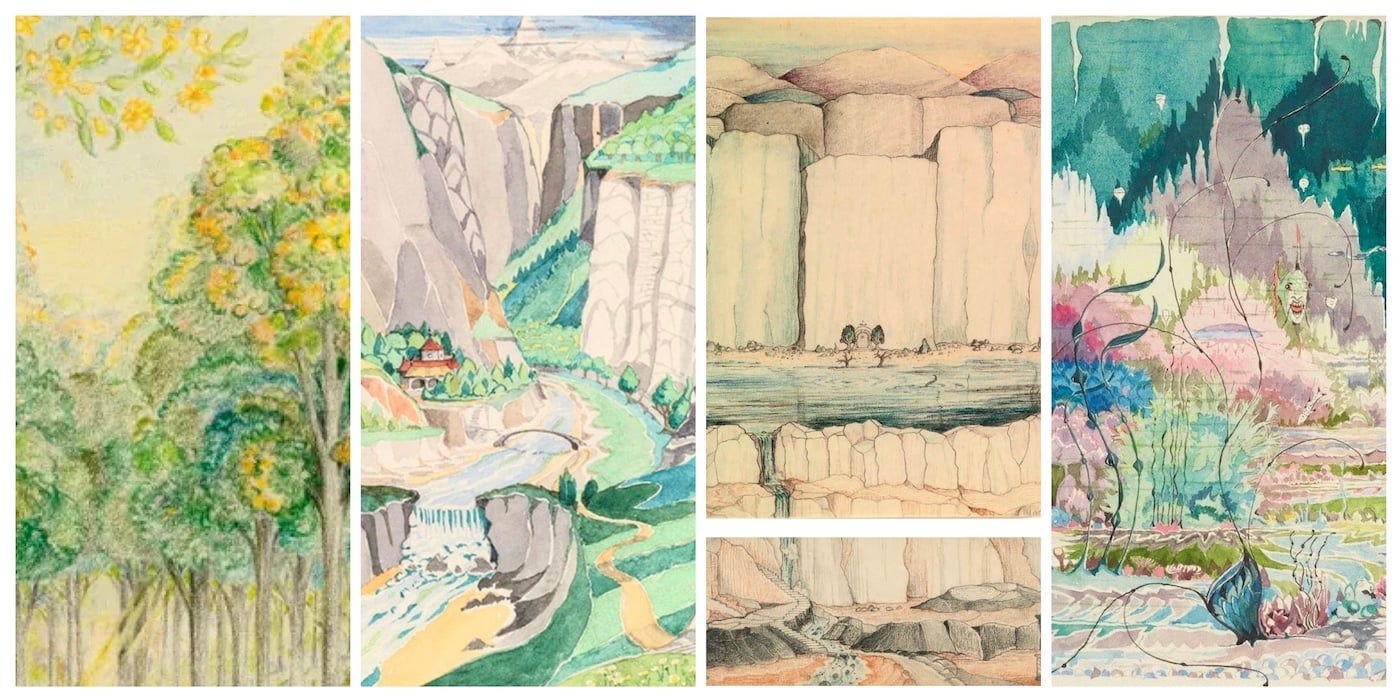
LOTR Fans and LOTR Critics
While The Hobbit was much-admired as a fanciful children’s book, The Lord of the Rings’ initial reception was mixed, to say the least. Over the seven decades since, the trilogy has certainly taken its share of critical beatings. It’s been damned as esoteric, trite, old-fashioned, clumsy, juvenile trash, hippie, and nerdy.
However, from its 1954 publication onward a “passionate minority” also arose to praised its brilliance. Even big names in literature were enthralled. The great poet W. H. Auden labeled it a “masterpiece” that in some ways outdid Paradise Lost. (!!) Others, too—Iris Murdoch, Richard Hughes, Ursula K. Le Guin—were early enthusiasts. Fellow Inkling C. S. Lewis may best encapsulate the early praise:
[The Fellowship of the Ring] is like lightning from a clear sky; as sharply different, as unpredictable in our age as [William Blake’s] Songs of Innocence were in theirs. To say that in it heroic romance, gorgeous, eloquent, and unashamed, has suddenly returned at a period almost pathological in its anti-romanticism, is inadequate. To us, who live in that odd period, the return—and the sheer relief of it—is doubtless the important thing. But in the history of Romance itself—a history which stretches back to the Odyssey and beyond—it makes not a return but an advance or revolution: the conquest of new territory.2
Today, three or four generations later, the scales are now fully weighted in Tolkien’s favor. To say a “passionate few” has galvanized around Tolkien seems trite—Middle-earth is beloved, intellectually admired, and respected by both the minority and majority. I can’t think of many authors in the last century to enjoy such a long, warm embrace.
Yes, some snobs still refuse to acknowledge LOTR as “real” literature, but so what? Since the 80s and 90s their puddle seems rapidly evaporating. Serious scholarly work abounds on not only LOTR, but The Hobbit, The Silmarillion, and Tolkien’s other tales. A constant stream overflows with both peer-reviewed articles within the academic establishment as well as countless videos, podcasts, and mass-market books besides. The Professor’s letters are scoured for nuggets of information, his every word choice analyzed and annotated. Entire conferences are devoted to Tolkien’s life, lore and writing. University students are increasingly assigned his books, sometimes entire courses focusing on Tolkien alone.
If Bennett was right, then it seems pretty clear the gate’s been opened wide and Tolkien is being triumphantly paraded into the Western Canon’s heavenly ranks.
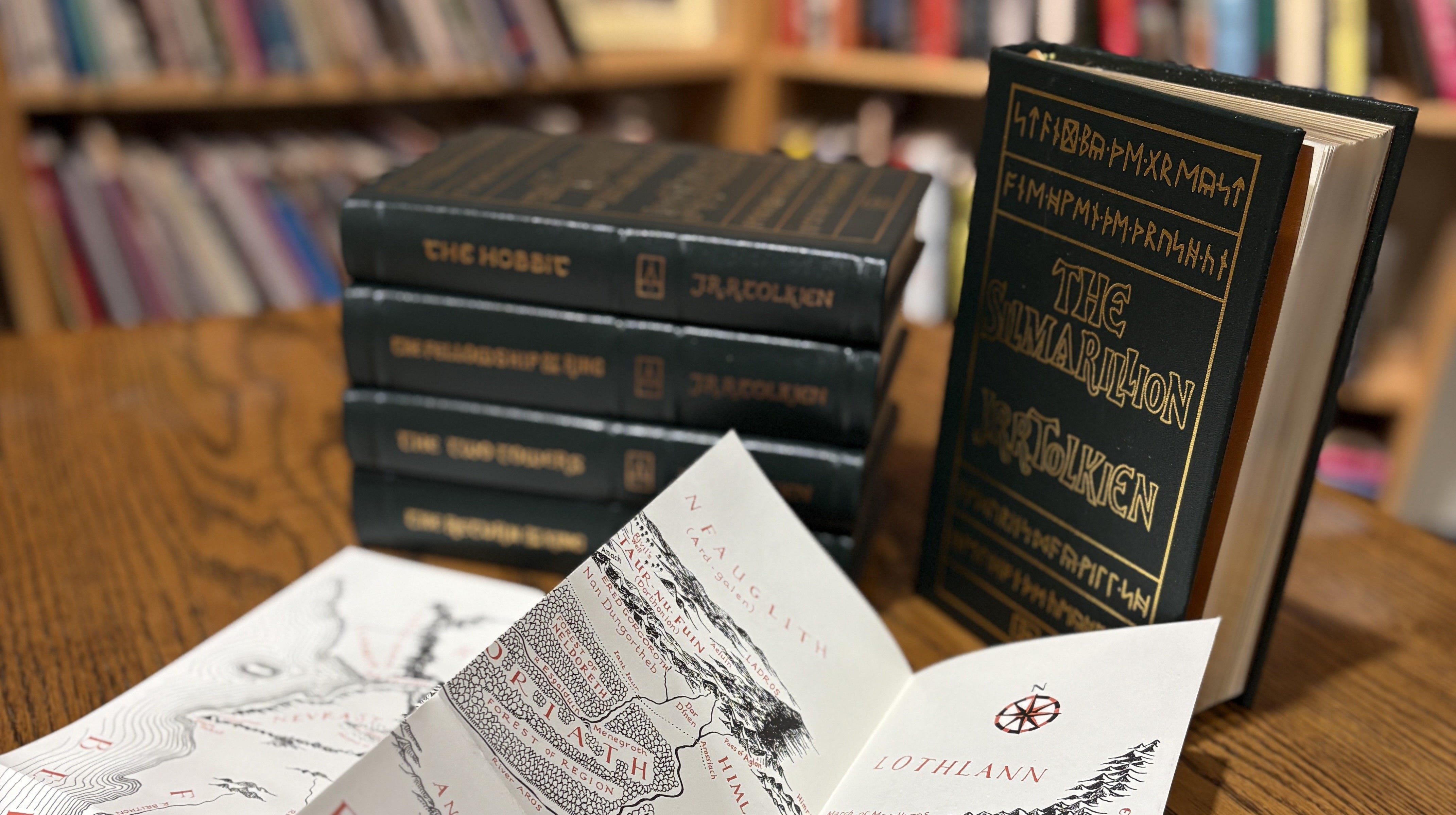
What Makes a Classic a Classic?
Okay, but let’s dig a little deeper to ask why. Why is The Lord of the Rings so lauded? What is it about the novel that lends it such weight?
Unfortunately, while Bennett traces a book’s path to the stars, he admits he can’t define which qualities make his “passionate minority” get so, well, passionate about one book over another. It resists a tidy explanation, he says. Although he invokes “truth, insight, knowledge, wisdom, humour, and beauty,” he freely admits “these comfortable words do not really carry you very far.” To him, the critic stands right beside the everyday reader, saying of masterpieces: “they give me pleasure. But why? No answer!”
The best Bennett can suggest is that it’s neither this-or-that moral value nor this-or-that literary quality, but a “mysterious” intuition collectively formed by well-trained, experienced readers—that’s eventually caught, like a benign flu, by the public at large:
[A classic] survives because it is a source of pleasure, and because the passionate few can no more neglect it than a bee can neglect a flower. The passionate few do not read “the right things” because they are right. That is to put the cart before the horse. “The right things” are the right things solely because the passionate few like reading them.
Although this may not be overly helpful, other critics have tackled the question far more boldly than Bennett. Two of my favorites are Italo Calvino in Why Read the Classics? (1986), and Harold Bloom’s The Western Canon (1994). Neither gives us a tidy, systematized checklist; instead they offer markers of greatness. I find them useful, so maybe you will as well.
So let’s (clumsily) try to combine Calvino’s and Bloom’s ideas into a handful of aspects. As we run through them, we’ll also see how the Professor fares.
1. Aesthetic Splendor
For Bloom, everything begins and ends with aesthetic merit. A classic work possesses what he calls “aesthetic strength,” or “aesthetic splendor”—a “mastery of figurative language, originality, cognitive power, knowledge, exuberance of diction.” A book cannot be justified by ideology, educational usefulness, cleverness, or moral uplift. It must overwhelm readers by artistic force.
Crucially, this splendor is apprehended by individual readers alone. Bloom insists the aesthetic is “an individual rather than a societal concern.” Canonical value can be widely recognized and discussed, but it can’t be argued into existence or rammed down the reading public’s throats. No: to Bloom, “one breaks into the canon only by aesthetic strength.” The book is the thing.
This is perhaps the least formulaic of the criteria—possibly a bit too broad. It’s likely what Bennett was circling when he said only passionate, experienced readers can recognize literary greatness. Aesthetics relies on subtlety, and only the fluent few have the antenna to detect it.
Tolkien’s Aesthetics:
So does The Lord of the Rings display aesthetic strength? Well, it certainly has originality. And judging by how much scholarly ink is ardently spilt over its themes and meanings, it also appears to abound in “cognitive power.” Even its diction is top-notch: as a philologist, Tolkien thought long and hard about the meaning and impact of every word choice, and the end result is wonderful.
It appears that the LOTR’s only Achilles heel may be its style. Even fans admit it’s anachronistic, written in an older, outmoded register. Some who want to love the books quit reading in frustration because of it. Bloom himself slammed Tolkien for this, mocking him as “stiff, false, archaic, overwrought, and finally a real hindrance [to reading].” Worse, he insults the style as some sort of King James Bible knockoff that reminded him of reading the Book of Mormon.
Fair enough, I suppose, if overly harsh. But isn’t anachronism the point? Tolkien is not trying to be a Melville, Faulkner, or Joyce; he’s crafting a modern mythopoeia, and as such an “archaic” style works perfectly. It’s all that would work, in fact. As Lewis argued (above): in LOTR “heroic romance, gorgeous, eloquent, and unashamed, has suddenly returned.”
2. Strangeness
The hallmark of mediocrity is cliché—resulting in what Bloom derisively calls the “period piece.” Yes, a mediocre book may turn bestseller, but after its 15 minutes fade, so does the book. It has no lasting interest.
By contrast, canonical authors stretch out and “overwhelm the tradition and subsume it” with the unique twist of their approach or the particular ways they encapsulate ideas. Greatness, for Bloom, is almost always marked by “strangeness.”
The paradox (and difficulty) of great books lies in this uncanniness. Their strangeness is not mere oddity, but also somehow just right—and this shocks the reader. Classics make us “feel strange at home,” presenting new angles and perspectives, and ultimately changing our worldviews. Canonical literature never flatters the reader; it confronts and ultimately enlarges.
Thus the first encounter with a great book is often uncomfortable:
“When you read a canonical work for the first time you encounter a stranger, an uncanny startlement rather than a fulfillment of expectations.”
But the more the work performs its magic on us (and on the culture), the more it feels inevitable—like it was always right, it had to be this way all along. Bloom says all classics possess “a mode of originality that either cannot be assimilated, or that so assimilates us that we cease to see it as strange.”
Calvino mentions this too, focusing especially on how such strangeness “plants” itself in us:
“[C]lassics are books that exert a peculiar influence, both when they refuse to be eradicated from the mind and when they conceal themselves in the folds of memory, camouflaging themselves as the collective or individual unconscious [...] If we reread the book at a mature age we are likely to rediscover these constants, which by this time are part of our inner mechanisms, but whose origins we have long forgotten. A literary work can succeed in making us forget it as such, but it leaves its seed in us.”
We recognize ourselves more fully because the classic upsets our assumptions. The literary canon does not baptize us into some ethical purity, nor relieve our questions or concerns. A masterpiece doesn’t set us “free of cultural anxiety”; rather, it “confirms our cultural anxieties, yet helps to give them form and coherence.” The classics do not solve the problems they point out—they clarify them, forcing us to think, to dig deep, sometimes shaking our entire lives as they do.
This is why Bloom bluntly says, “Without the Canon, we cease to think.” The classics sharpen our cognitive and rhetorical power—our ability to perceive metaphor, nuance, and life’s complexities. They increase the mind’s and heart’s capacities. Lesser works entertain; canonical works expand consciousness.
Tolkien’s Strangeness:
Similar to his archaic style, I think “strangeness” works within The Lord of the Rings via contrast. The unsettling power of the work is in large part due to how thoroughly Tolkien transports us away, jarring us from our comfortable modern lives into a long ago age that never existed. Had LOTR been written a thousand years prior, maybe it would not have been as strange (if at all); but in the twentieth and twenty-first centuries, the entire book feels like a gauntlet thrown at the reader’s feet.
Our consciousness is enlarged by suffering with Frodo and Sam, witnessing Aragorn’s majestic return, and so forth. The book challenges us: we must confront heroism, sacrifice, simple goodness, even God’s workings in the world.
3. Rereading
Bloom offers one ancient test that remains “fiercely valid” for a classic: “unless it demands rereading, the work does not qualify.”
Calvino famously supports this, too:
“A classic is a book that has never finished saying what it has to say. [...] Every rereading of a classic is as much a voyage of discovery as the first reading.”
Canonical works are normally dense (and “strange”), so they resist quick consumption. One readthrough is never enough. No mere pleasure here, but “high unpleasure or more difficult pleasure that a lesser text will not provide.” This difficulty is not obscurity for its own sake–classics don’t need to be experimental (though some are). But they must contain layered meanings and aesthetic compression.
Bloom derides works he believes are “top-heavy” with messaging or political urgency but lacking aesthetic density. A book may be morally forceful or socially relevant (and thus highly popular in its day), yet these are temporary. If the book doesn’t reward rereading by one generation after another—if it doesn’t deepen upon each return trip through the text—it fails the test of canonical endurance.
Canonical works never exhaust themselves; instead, they generate renewed thinking. Readers return not because teachers require it, but because something always remains unfinished in the encounter.
I love how personal Calvino makes this. He says we each have our own classic book waiting for us, one that will nose its way into our very souls:
“we do not read the classics out of duty or respect, but only out of love [...] Your classic author is the one you cannot feel indifferent to, who helps you to define yourself in relation to him, even in dispute with him.”
Tolkien’s Rereadability:
This may be the easiest criterion to highlight, for Tolkien certainly rewards rereading. Yes, this is true on an enjoyment level, but moreover is what the LOTR has to say. A reader could memorize the epic quest, the battles, every plot point and character, even lines of dialogue, yet more would await exploration in Middle-earth: languages, side characters (I see you, Tom Bombadil), connections with the larger legendarium, themes, not to mention simple phrases and titles. For example, I once read an entire essay on the significance of Frodo being repeatedly called “elf-friend”—you could read LOTR every year your whole life and never pick up on that, but once you have it refreshes the novel for us.
(Bonus: check out the Amon Sul podcast which walks through Tolkien’s works, chapter by chapter, elucidating more than you ever thought possible!)
4. The Anxiety of Influence
Canon formation, Bloom argues, is not friendly transmission but a death-match between newer and older works:
“Poems, stories, novels, and plays come into being as a response to prior poems, stories, novels, and plays […] a conflict between past genius and present aspiration, in which the prize is literary survival or canonical inclusion.”
Slightly less dramatically, Calvino adds:
“A classic is a book that comes before other classics; but anyone who has read the others first, and then reads this one, instantly recognizes its place in the family tree.”
Bloom famously labels this struggle “the anxiety of influence.” Canonical writing is “always rewriting.” Elbowing the past greats to clear out space for the self. This anxiety cripples weaker authors as they wonder how to compete with—or even contend with—the giants that came before them. But instead of crippling the masters, anxiety “stimulates canonical genius.”
Greatness recognizes greatness but is not overshadowed by it. Great books do not merely admire the past; they wrestle with it, distort it, absorb it, and emerge transformed.
Any strong literary work “creatively misreads a precursor text,” pushing it (and us) forward. Masterpieces overwhelm the tradition rather than being overwhelmed by it.
During interviews, Bloom implies this was a baseline qualification for classically-striving works. For example, while Toni Morrison earned his praise for Song of Solomon due to its successfully melding Woolf and Faulkner, Beloved is, in his view, a blustery, overtly political work—a period piece, not an aesthetic accomplishment. Another interviewer asked Bloom about Harry Potter, which he dismissed as “all clichés,” unlike The Wind in the Willows, which was fresh and beautiful.
Tolkien’s Anxiety of Influence:
When I explained Tolkien’s aesthetic splendor, I pointed out that his work is purposefully anachronistic. A prime reason for this is definitely the “anxiety” he felt about modern literary influences: he grappled with his modernist/postmodernist contemporaries and predecessors by out-and-out rejecting them. (And spitting on their graves.)
I’m not sure how many newer novels the Professor actually read, his head being stuffed with Sir Gawain and the Green Knight, traditional fairy tales, and such, but it’s clear his goal was trashing all influences from the previous centuries, elevating and emulating much, much older authors and works.
But it’s not really that simple, is it? His refusal to write a “current” novel actually created a current novel—just a remarkable one. One that feels shockingly new, being a combination of both ancient and current. He is not simply recreating The Kalevala or Beowulf, but establishing a new tradition—his own—that fuses them with romantic literature. And that proved groundbreaking.
In Conclusion…
So where does all this gobbledygook leave us?
First, it leaves me feeling humble. Bloom, for all his snotty bravado, was right when he said predicting canonization is a fool’s game. We can’t know the future, and the canon is not a committee decision, nor a scientific process. It’s messy, seeing how literature survives the long, slow winnowing of time. The most we can do is make an educated wager, guided by hints of greatness, then wait and see.
And yet: if I were going to place a bet, Tolkien seems about as safe as it gets.
The Lord of the Rings has the aesthetic strength, the strangeness, the density that rewards rereading, the deep embeddedness in (and “creative misreading” of) older traditions—not to mention the unmistakable power to enlarge the inner life of us readers.
More than that, it ‘s already done what classics do by generating Bennett’s “passionate minority” of devotees—scholarly and otherwise—across multiple generations, in separate corners of the world, with no sign of petering out. I’d argue that every indication is that Middle-earth will continue to be read about, loved, argued over, annotated, imitated, and—yes—studied, for centuries to come.
If the canon is what endures, then Tolkien probably isn’t knocking at the door anymore. He’s already inside, taking his seat at the table.
Thanks for visiting the Reading Room! As always, I’d love to hear your thoughts on this: what did I miss or get plain-old wrong? Do you agree that Tolkien is halfway to classical status?
Special thanks to Tristan and the Classics for introducing me to Bennett’s work.
C.S. Lewis, “The Gods Return to Earth.”
Tolkien absolutely belongs in the canon, not only for his mythic breadth but for how his work redefined the modern epic. His philological grounding and moral complexity offer layers of interpretation that will continue to resonate for generations. That said, canonization has historically favored certain cultural perspectives, so while we celebrate Tolkien, we also must invite diverse voices who have yet to be fully recognized.
As for the Sanderson debate, while I respect Beck’s and others’ viewpoints, it’s a bit early to measure Sanderson by classic standards. Tolkien and Sanderson are crafting different mythologies for different eras. The truth is, we don’t yet have the hindsight to know Sanderson’s legacy, just as Tolkien’s stature wasn’t sealed overnight. If we agree that classics endure through future generations, then we can only say Tolkien is likely a classic, and Sanderson may yet become one.
Superbe essay, a masterpiece and your best work so far. I'm going to have to link to it in an upcoming essay of mine on the nature of publishing, writing and 'Neo-Classics', hope you don't mind this was amazing Don!